Closed beta · for developers
Email that arrives, from your own domain.
Sendaloo is an email API for developers. Your apps send sign-in links, receipts and notices from your own verified domains through one simple, Resend-compatible API, with no fee per domain. The dashboard shows every message.
Add a domain, set its DNS records once, create a key and send.
How it works · assembly
Domain, key, template, send.
Recorded in the Sendaloo dashboard on a demo app. The domain and the key are made up.
Add your domain
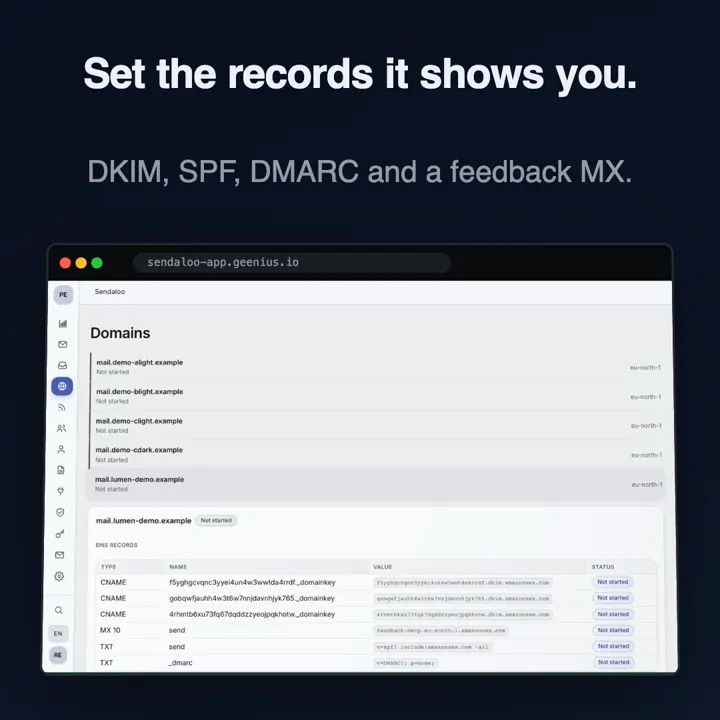
Type the domain your app sends from. Sendaloo gives you the DNS records to set once: the DKIM keys, the sending subdomain and the policy. It tells you when they are in place.
Create an API key
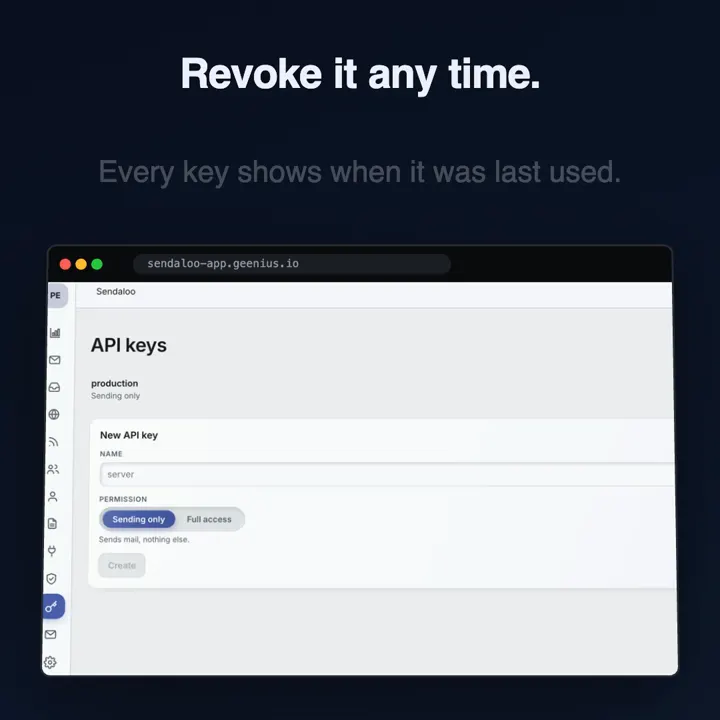
A key for your app's server, sending only or full access. It is shown once, so you copy it then. Revoke it any time.
Keep your templates
A template is HTML with variables. Store it once and send it by its id, so the words live next to the design and not inside your code.
Send
One request to POST /emails with your key. The dashboard shows the message and what happened to it.
Details · recorded in the dashboard
Three details, to scale.
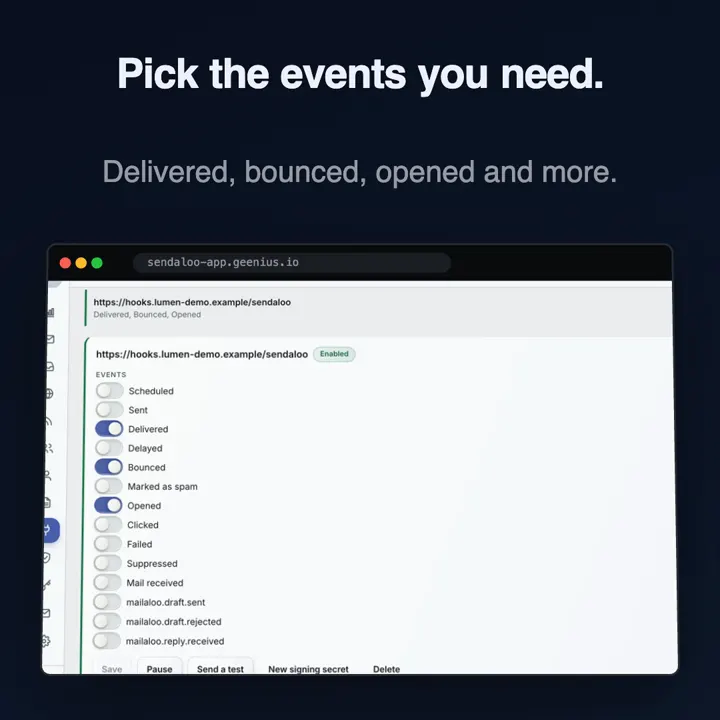
Short films made with Geenius Video from recordings of the Sendaloo dashboard, on a demo app with a made-up domain.
One API · spec sheet
Send with the API you already know.
The routes are Resend's: change the base URL and use your Sendaloo key. Webhooks tell your app what happened to each message.
POST /emails
{
  "from": "hello@mail.yourdomain.com",
  "to": "sam@example.com",
  "subject": "Your sign-in link"
}
An example of the shape of a request, not a live record.
| Method | Route | Purpose |
|---|---|---|
| POST | /emails | Send one message |
| POST | /emails/batch | Several messages in one call |
| POST | /emails | scheduled_at: send it later |
| POST | /emails | template.id: a stored template |
| POST | /domains | Add a sending domain |
| POST | /api-keys | A key per app |
| POST | /webhooks | Events to your app |
| GET | /suppressions | Bounced and complaining addresses |
What is in it · bill of materials
The parts of a mail service.
What exists in the beta today.
- 01Your own domainsSend from your verified domains, with no fee per domain.
- 02Keys per appSending-only or full-access keys, optionally limited to one domain.
- 03WebhooksDelivery events pushed to your app, with a delivery log and replay.
- 04SuppressionsHard bounces and complaints are kept off your next send by themselves.
Your terms · revision block
Boring, in the good way.
Sendaloo does the sending. You keep the domain and the data.
| Rev. | Note | What it means |
|---|---|---|
| A | Your domain stays yours | The records live in your DNS. Remove them and Sendaloo can no longer send as you. |
| B | Every message visible | The dashboard shows each message and what happened to it, newest first. |
| C | Honest about the beta | This is a closed beta. This site describes what exists today and nothing more. |
Title block · approval
Ready to send from your domain?
Sendaloo is a closed beta. Request access and we write back when your seat is ready.
Request access- Project
- Sendaloo
- Status
- Closed beta
- Drawn by
- AVS Media
- Region
- EU